Podium · Sole Designer · 2023–2024 · 0→1 Product
Podium is a design automation and feasibility platform for the built environment. Podium connects architects, engineers, and developers together into one design platform. The suppliers weren’t a part of this picture. They had their product information stored in static PDFs and offline catalogs, which was totally separate from the place where decisions about the building were being made. I led the design of this gap from start to finish over the course of a year.
$5M
25
0→1
In short
Challenge
Suppliers were not part of Podium's building design process. Their product information was available through offline catalogues and PDFs. Not connected with where decisions on specifications are made.
What I did
Sole Designer from discovery to handover. Conducted supplier interviews, architecture interviews and designed three products: supplier portal, product catalogue and Component Selector within Podium's 3D environment.
Outcome
Shipped the entire supplier side of the platform from scratch and extended the design system to support it. Contributed to Podium's $20M Series A raise, with 25 supplier partners since onboarded with real product data.
The challenge
A gap in end-to-end building development
Podium’s vision was DfMA, in connecting the right supplier products to project designs in real time, so that data drives procurement rather than guesswork. Podium had an extensively developed project side for architects and engineers working within a 3D environment at the site, building, and component level but there was nothing on the supplier side prior to this project.
The suppliers had very little involvement in the process of developing buildings. This is the missing link this project is meant to fill. The challenge was “How do we bring suppliers upstream into the building design process and make it valuable for everyone involved?“

Podium platform ecosystem, project teams (developers, architects, engineers) on one side, suppliers with their CMS and product catalogue on the other. This project built the supplier half from scratch.
Core issues
The supplier product data was in static PDFs, offline catalogues and third party websites - which is totally disconnected from the design process.
There was no way for architects and engineers to browse and specify supplier products within the platform.
There was no visibility for the suppliers on whether their products were being considered, specified or omitted.
Constraints
Sole designer: I was the single designer on the Supplier squad, collaborating with a product manager, a computation designer and engineering team.
No existing foundation: Podium had a design system that had been created for 3D scenes. It did not have any comprehensive form inputs, data tables and list components.
No pre-existing design precedence within Podium on what a supplier product should be.
Scope
Discovery: Interviews with suppliers, architects and SME in the industry to understand the AS-IS journey.
Foundation: Supplier onboarding, company set-up, product data import which is basically a CMS for the supplier product catalogue.
Portal: Supplier analytics, supplier product management and product catalogue tools for suppliers.
Component Selector: 3D product inspect interface embedded directly within Podium's 3D environment
Research
Understanding who & what we were designing for
My PM and I started by talking to suppliers, architects, and industry subject matter experts. We wanted to understand the journey a supplier actually goes through from design stage, through to tender submission, through to awarded contract.
We mapped the supplier AS-IS workflow and grouped all our observations by theme. That gave us a clear picture of where the pain was concentrated and where Podium could realistically provide value in the near term.
Early supplier conversations revealed that suppliers didn't just want to upload their data. They wanted to know what happened to their products. How often were products viewed? Which projects were they specified in? How did they stack up against others in the same category? This insight reframed the portal entirely from just a CMS to an active business tool.

Full supplier journey map across the building development process, showing each stage from design to procurement and where gaps exist

Mapping the full supplier journey across the building development process used to identify where the gaps were.
The solution
Three connected products
1. The foundation
Before anything else, suppliers needed a way to onboard, set up their company, and get their product data into the platform. I turned to proven patterns from Shopify and other established platforms to move quickly without sacrificing usability. Forms and layouts were built on Podium's existing design system, but I had to extend it with new form inputs, table layouts, and listing components that didn't previously exist.

Form controls — clean, accessible layout for suppliers entering their details and managing imported products
2. The portal
With the foundation in place, I focused on the portal next. Suppliers needed an at-a-glance view of how their products were performing with insights such as views, company page visits, total active products, recent project opportunities. The product listings view let them manage their catalogue, update specifications, and monitor what was live on the platform.
I applied progressive disclosure throughout the interface keeping in mind that new suppliers could focus on getting set up, while experienced ones could access deeper tools and integrations without them cluttering anyone else's path.
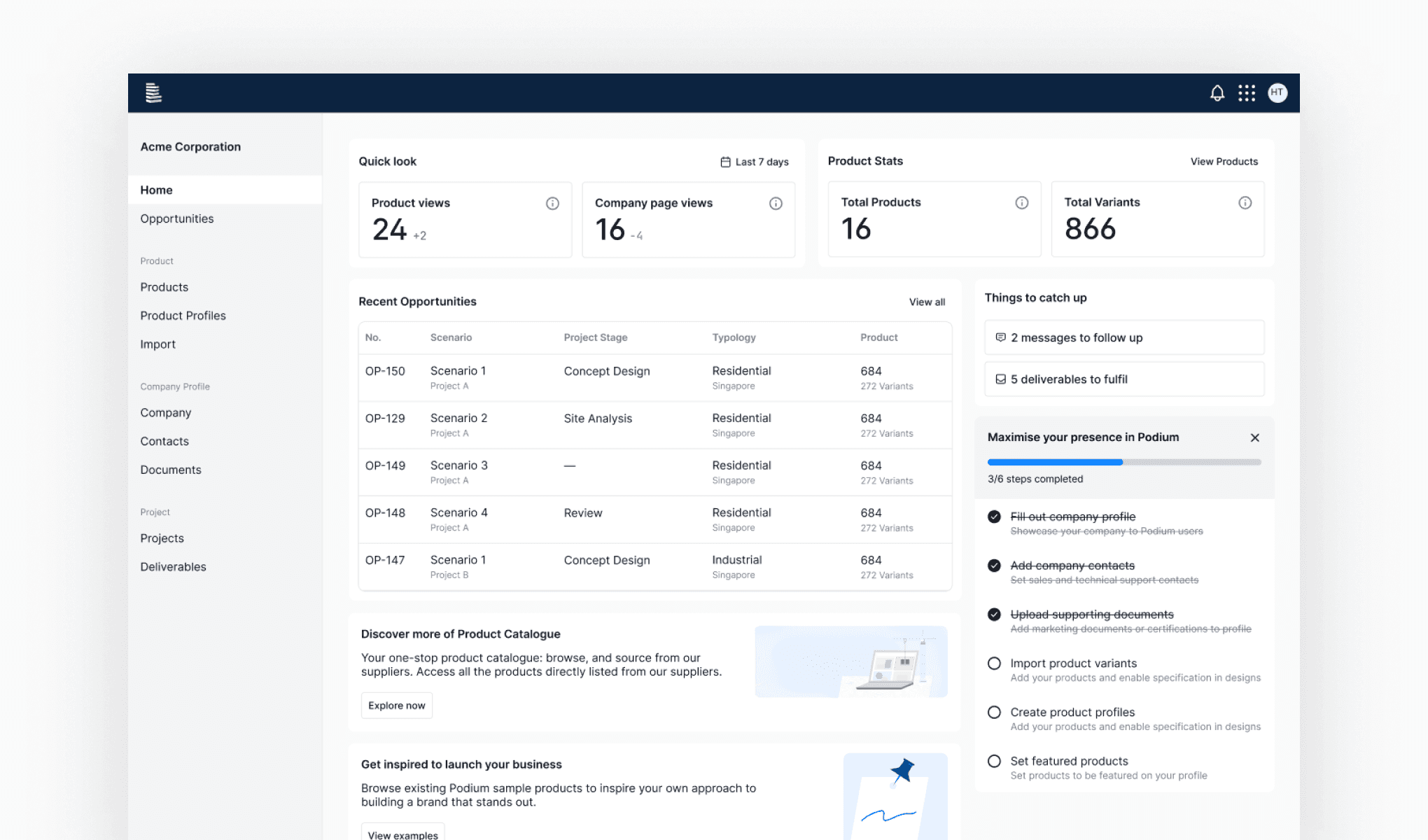
Supplier portal dashboard — product performance overview showing views, company page visits, total products, and recent project opportunities
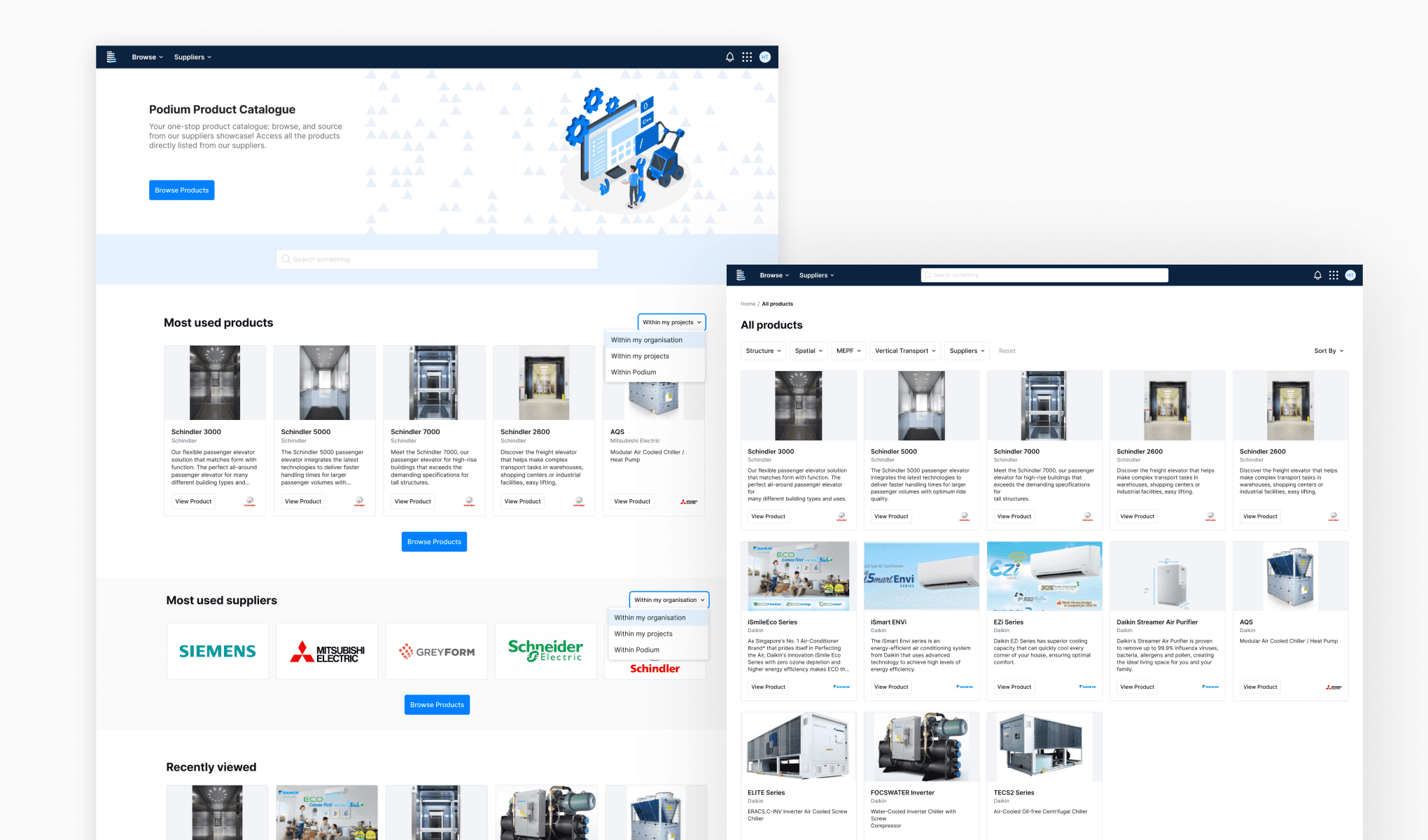
Product Catalogue and Product listings view
The component selector
The portal solved the supplier side. The harder challenge was connecting supplier data to what architects and engineers were actually doing inside Podium’s 3D environment.
There comes the Component Selector, which consists of a side-panel inspection interface that let users browse, filter, and preview supplier products without leaving the view they were already in. Architects could search and compare components against design criteria. Engineers could preview how a product would behave spatially in a live 3D scene, understanding fit and performance before committing to a specification. Suppliers, for the first time, could see exactly where their products were showing up in real projects.
With this feature, the feedback loop of design decisions informing suppliers and supplier data informing design completed the core of Podium’s vision.

Component Selector side panel — supplier product data surfaced inside an architect's live 3D building model at the exact moment a specification decision is being made
Demonstration of how product data connected to live 3D building model
Component Selector side panel — supplier product data surfaced inside an architect's live 3D building model at the exact moment a specification decision is being made
Impact
Three products, one connected journey
We shipped three connected products; a Supplier Portal for onboarding and catalogue management, a Product Catalogue for architects to browse and compare supplier products, and a Component Selector embedded directly inside Podium's 3D design environment.
As of today, 25 suppliers and manufacturers have onboarded with real product data in the platform. With this feature, Podium demonstrated transformative potential and reflects significant benefits for suppliers within the construction ecosystem. This led to securing $5M from Schindler as part of the Series A funding.