The Continental Bookstore
Continental Bookstore is one of Singapore's primary providers of academic textbooks for primary schools. Each year during November and December, the annual book ordering period creates significant demand, processing thousands of ordersin a tight timeframe. The existing system was unable to handle this volume reliably, resulting in lost orders, losing customer trust, and operational inefficiencies.
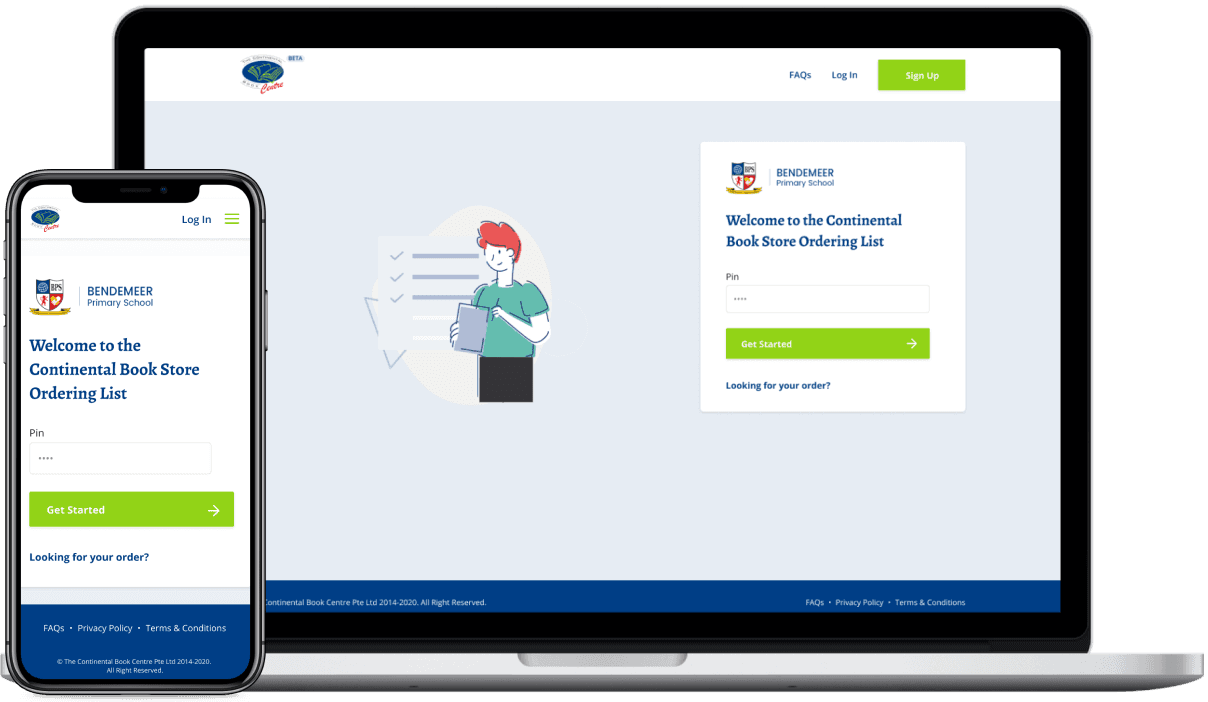
My Role
I led the design process from ideation through delivery, working alongside a project manager and the engineering team. That covered user interviews, user flows, information architecture, wireframes and prototypes at varying fidelity, user testing, and detailed specs for engineering handoff.
What we found
We interviewed the operations team at HQ and branch administrators. Direct access to parents wasn't possible within the timeline, so we gathered customer insights through the admin team. They had extensive contact and feedbacks from parents during ordering periods and knew exactly where things were breaking down.
What the research showed
Data integrity issues were causing lost orders and incomplete transactions
Peak season volume was overwhelming the infrastructure
Parents had real concerns about online payment security
Communication between HQ and branches created bottlenecks — queries took too long to resolve
HQ had no visibility into school-specific inventory demand, which made stock management a guessing game
What users actually needed
Parents
A checkout flow they could trust
No account creation required
Clear order confirmation and status
Operations team
Branch-level order ownership
Real-time inventory visibility
Faster query resolution
HQ focused on oversight, not firefighting
Given the project scope and delivery timeline, we structured the work in two phases. Phase one addressed the customer-facing book ordering experience, while phase two focused on distributed order management across HQ and branch locations.
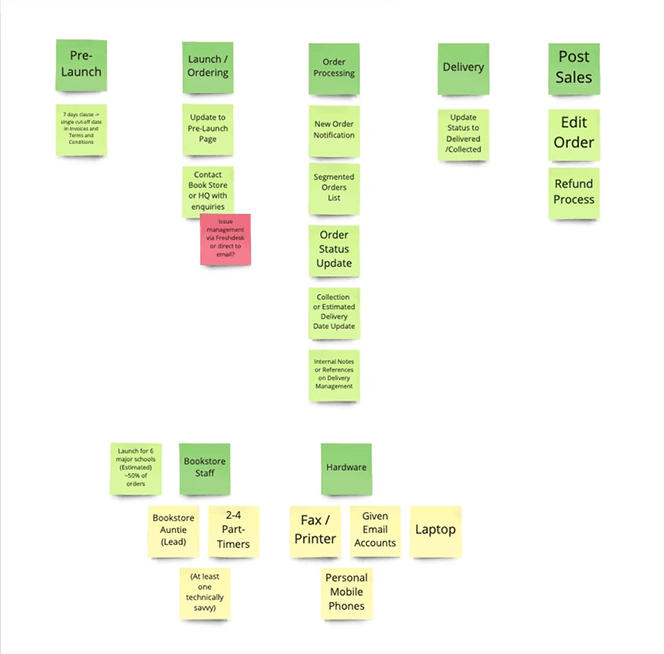
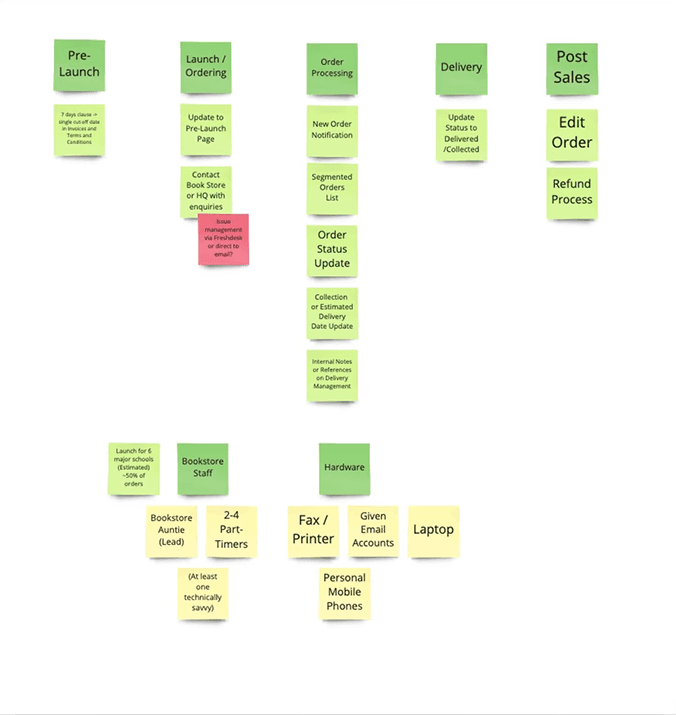
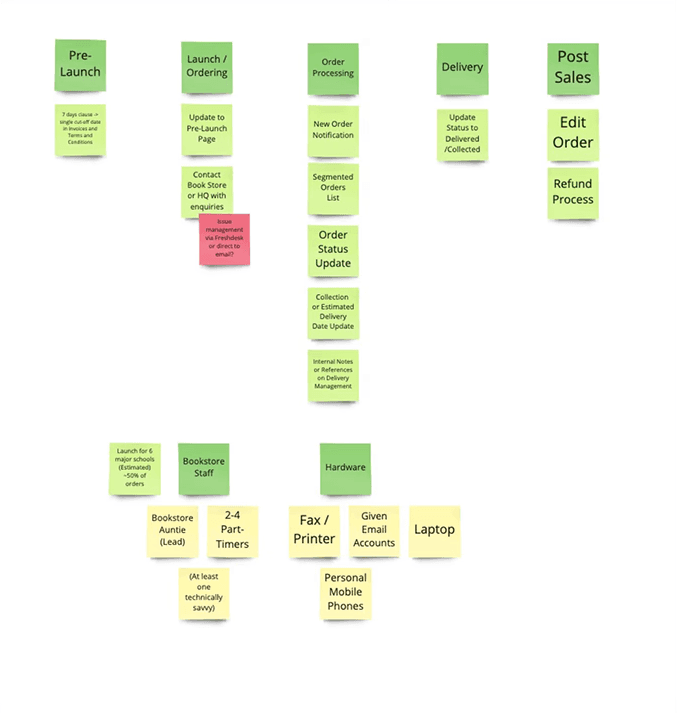
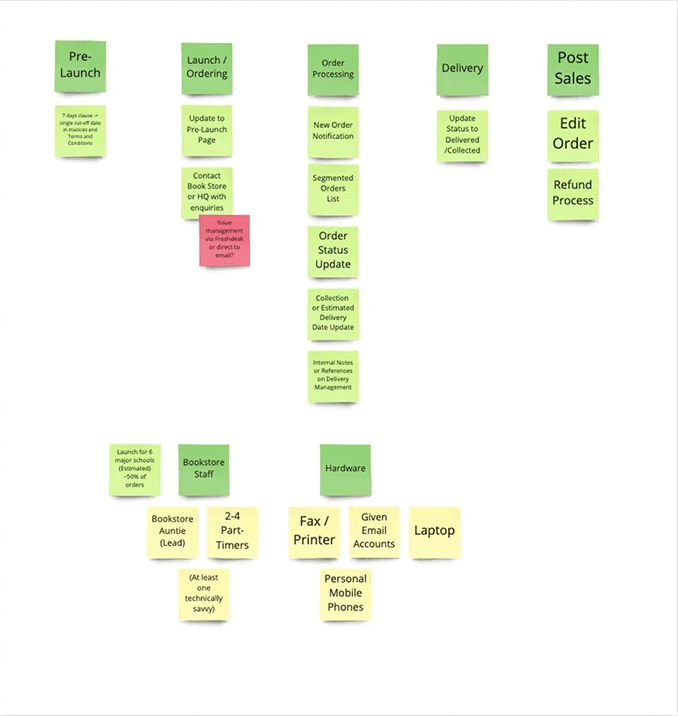
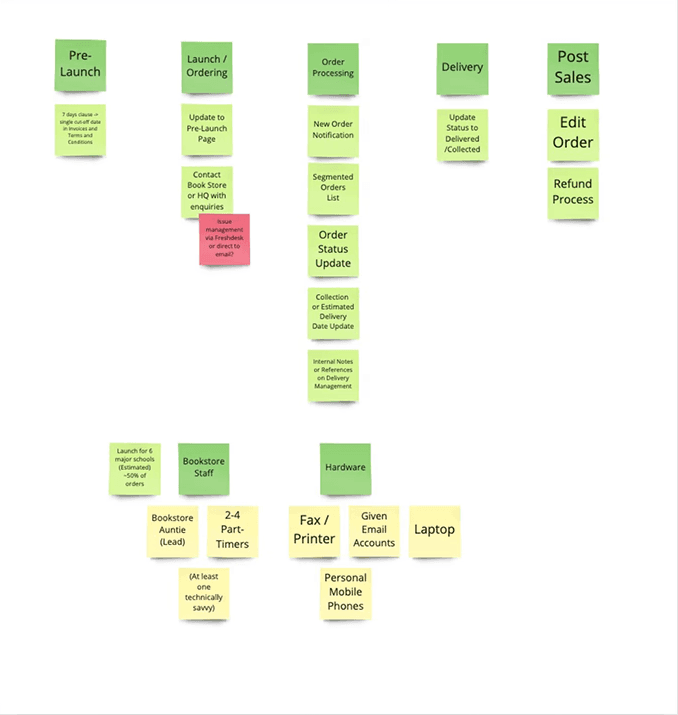
Scope of work
Designing the Solution
Mapping the Flow
I started by documenting the existing customer journey. The flow was unnecessarily complex. Parents had to navigate multiple unclear steps before they could even get to checkout. On the admin side, orders moved between HQ and branches without clear ownership, so nobody knew who was responsible for what.
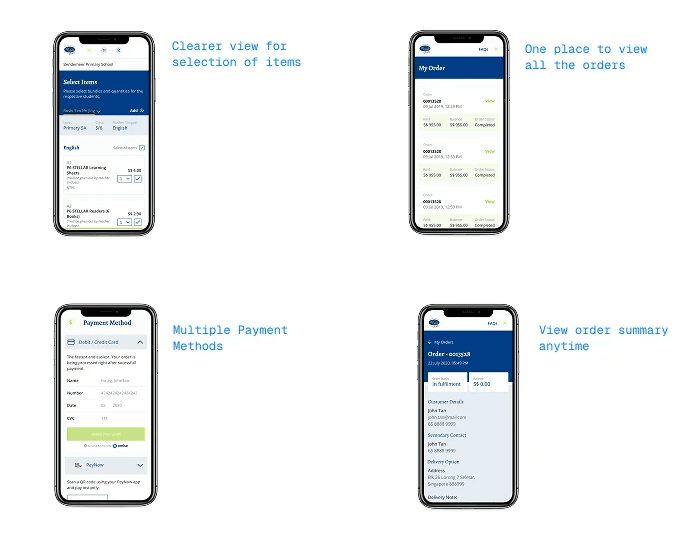
The redesigned customer flow came down to three steps: pick a school, browse the booklist, check out. No account required. For administrators, the new system gave each branch clear ownership of their orders, real-time inventory tracking, and automated flags for stock issues before they became customer problems.
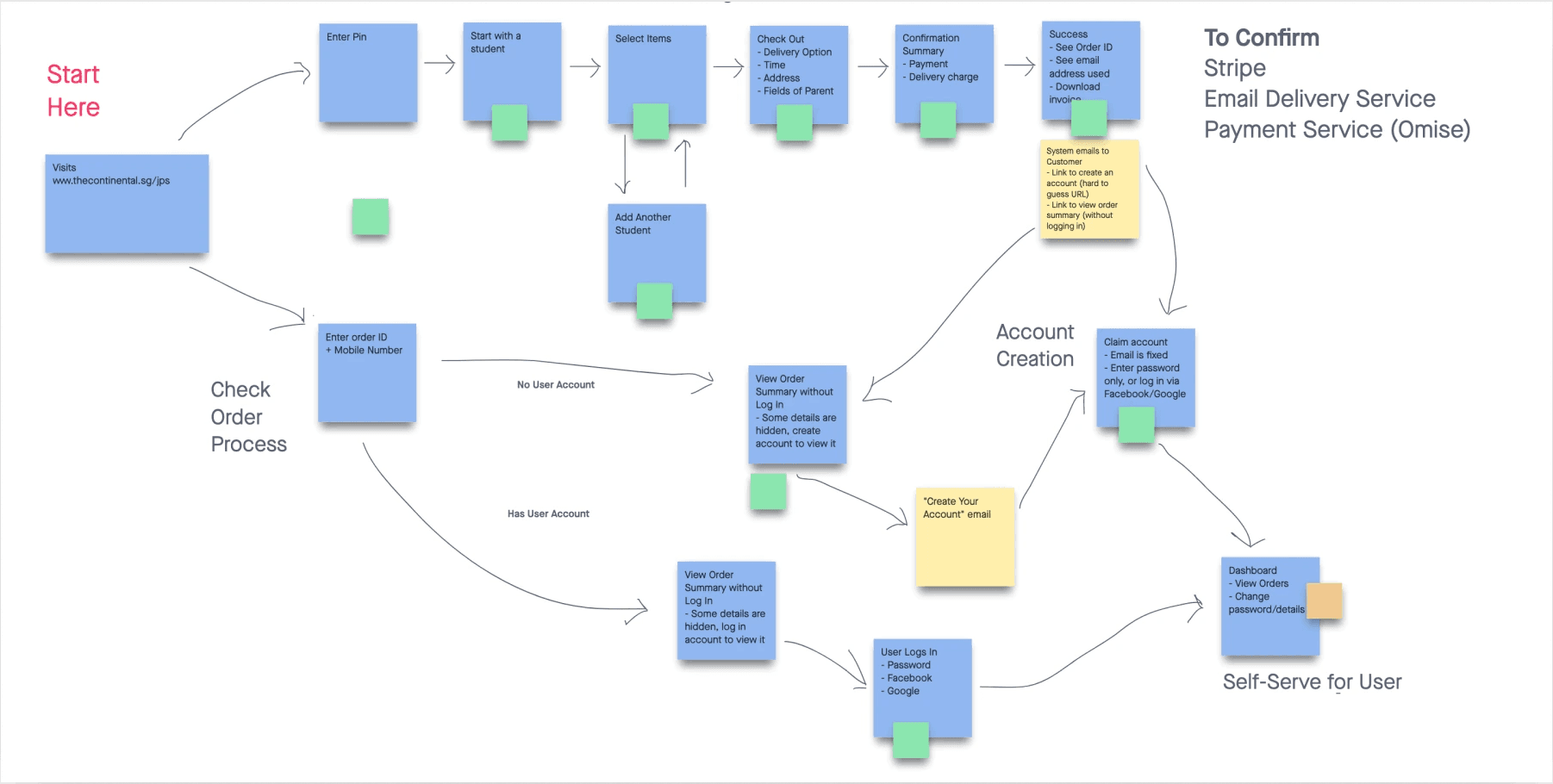
Customer book ordering process
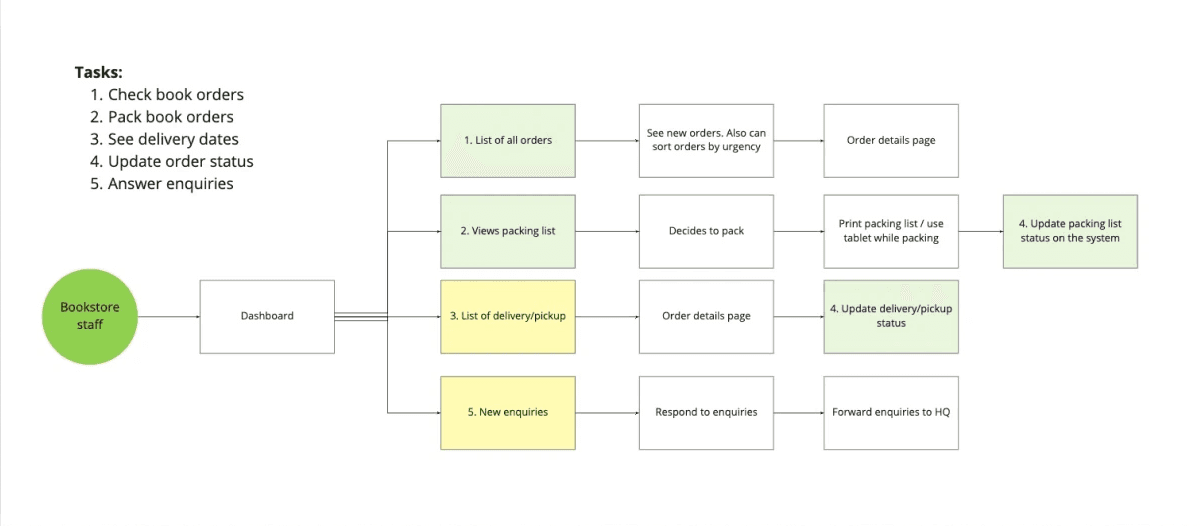
HQ and bookstores order management
Information Architecture
The system split into two distinct experiences: a streamlined ordering interface for parents, and a backend order management system for HQ and branches. The IA had to accommodate school-specific landing pages, order tracking, and branch-level admin dashboards without making the customer side feel complicated.
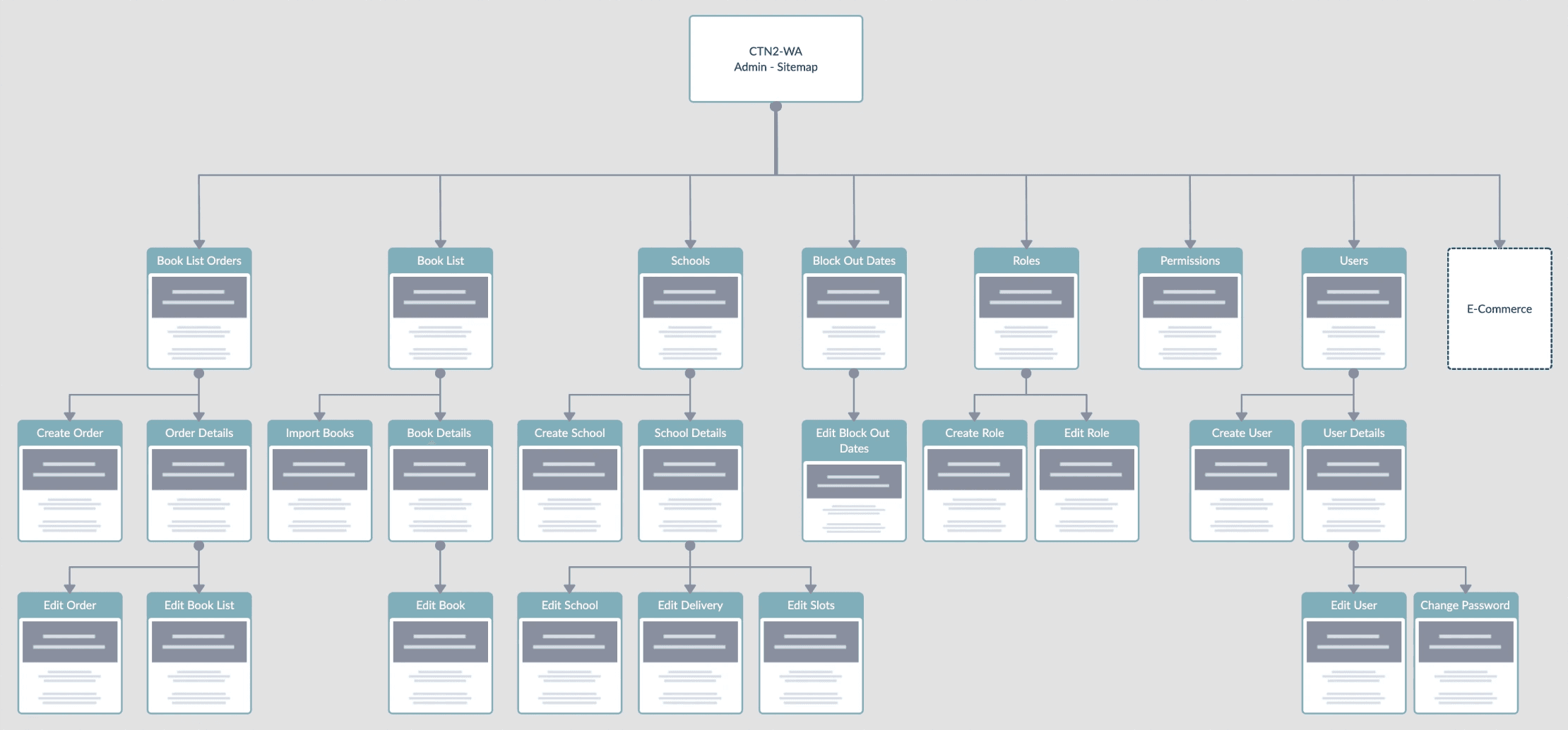
Site map for Admin’s Order Management
Wireframing and Testing
I built low-fidelity wireframes and tested them with the HQ operations team using an InVision prototype. Three things came out of it that changed the design:
Admins needed automated notifications for invoice downloads and order status changes
The system needed automated inventory alerts to flag orders where stock was insufficient, before those orders became a problem
School-specific login pages needed a lightweight CMS so branches could manage their own customisation without going through HQ
These findings directly informed the next design iteration, transforming the system from a simple order processor into a tool that anticipated operational challenges.
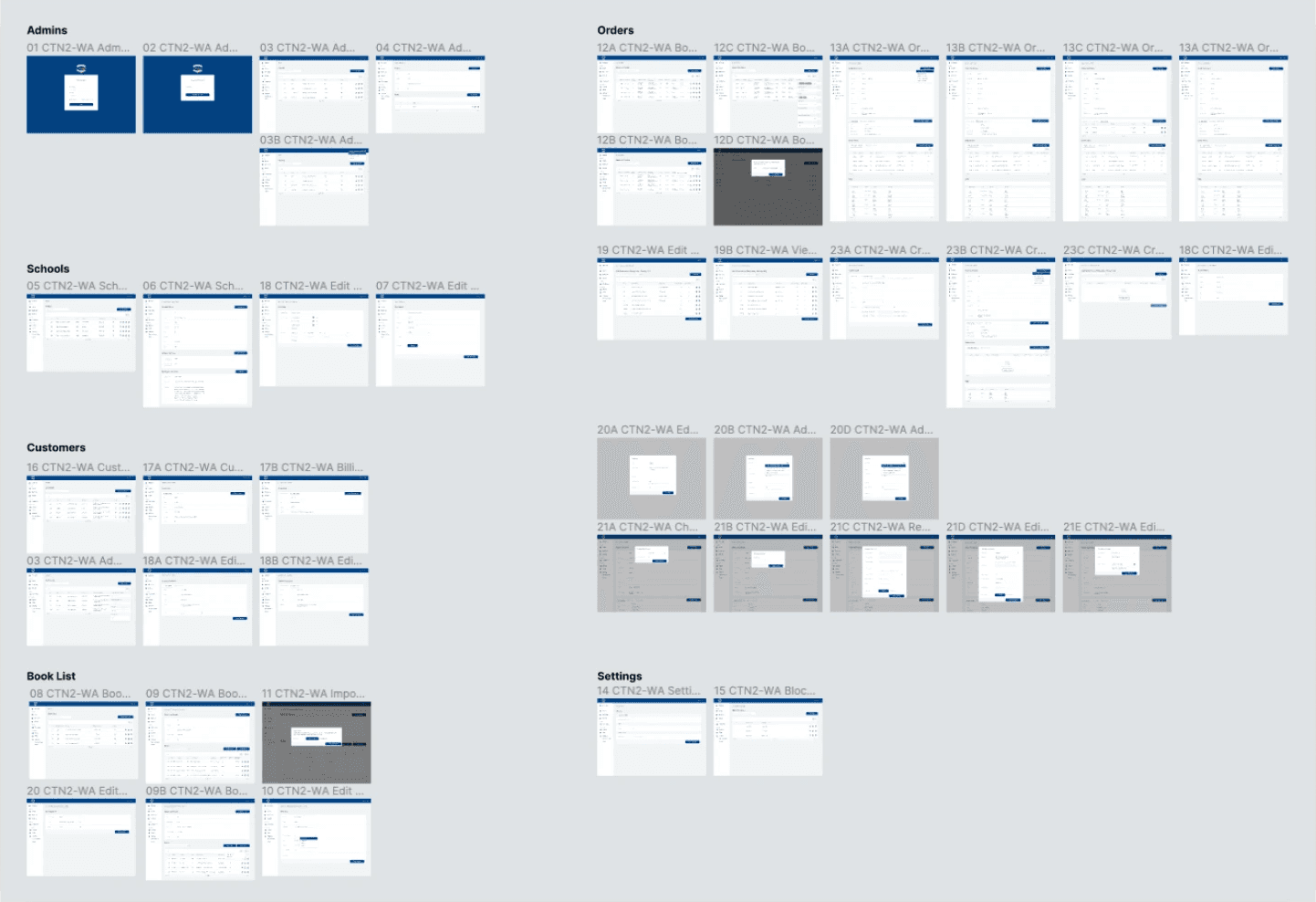
Wireframes for Administration and Book Order Management
Refining the Design
The customer-facing interface design was developed using Continental's existing brand guidelines, maintaining visual consistency with their established colors and typography. The design prioritised clarity and trust, essential for a transaction-based system where parents were initially hesitant about online payments.
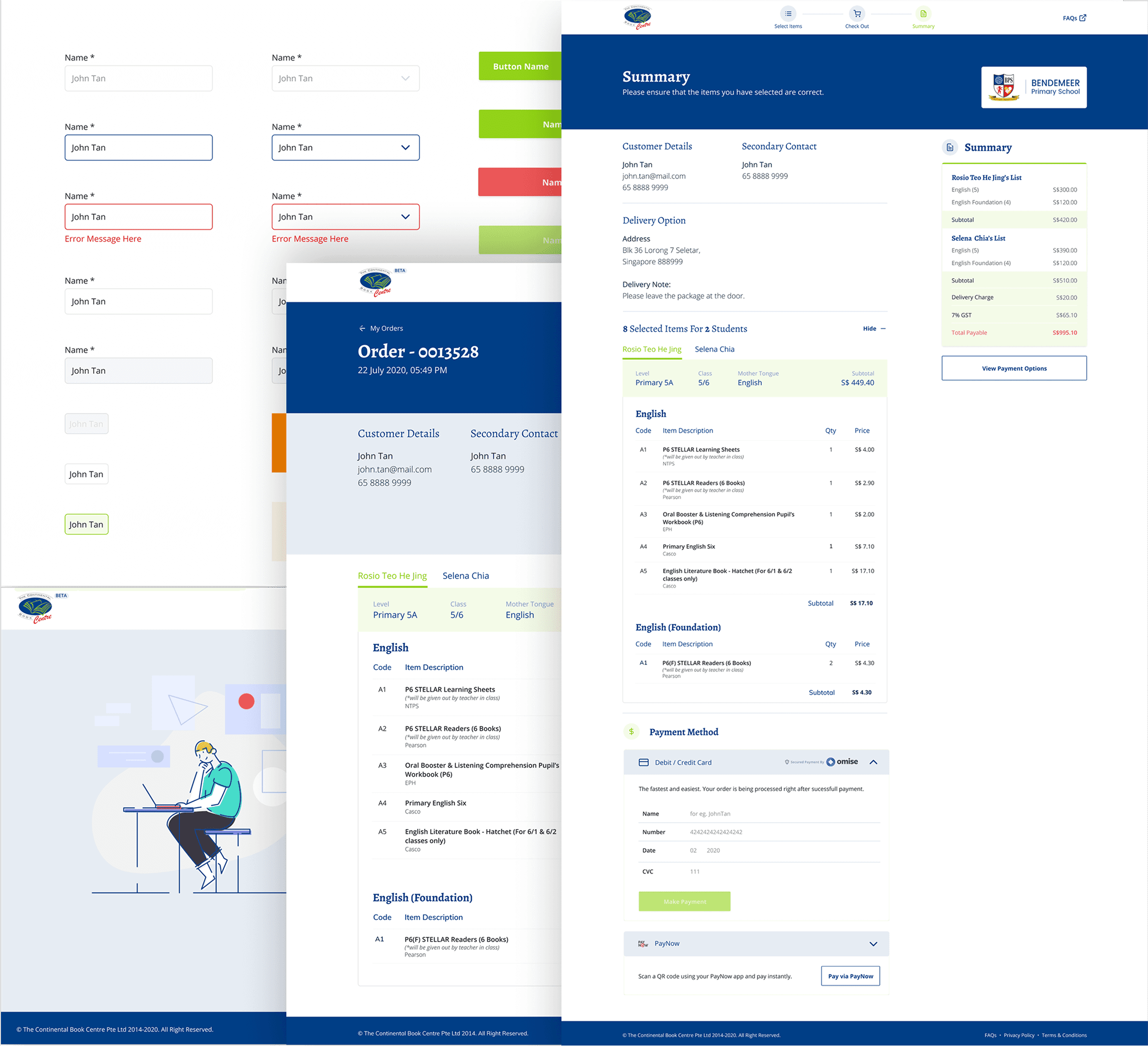
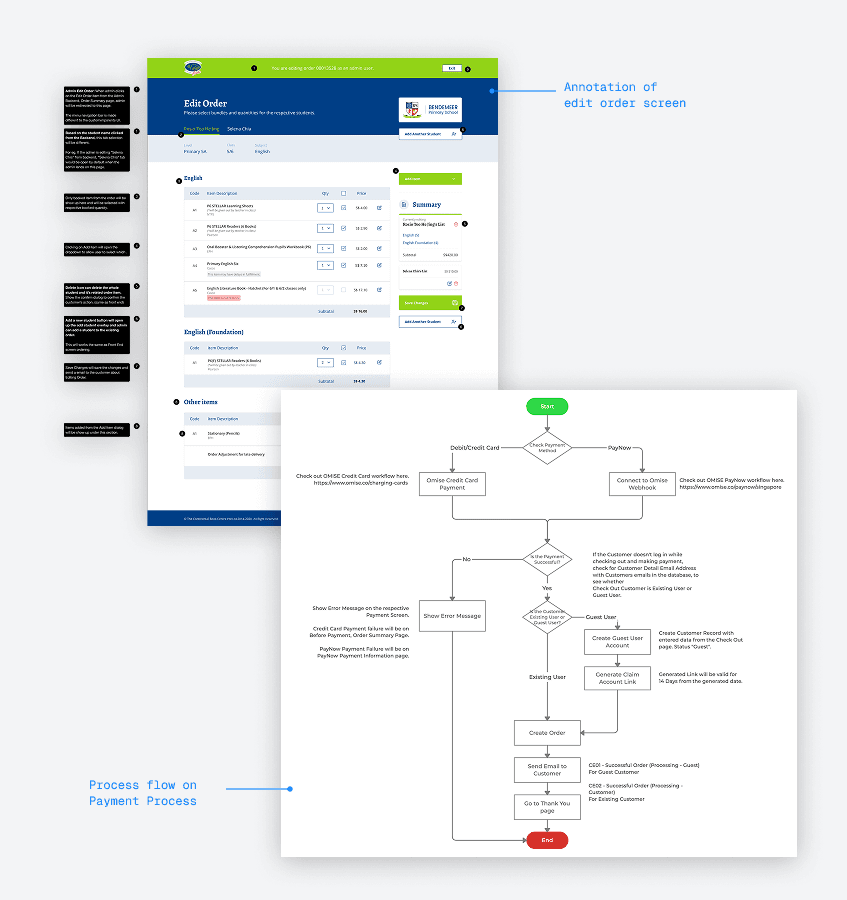
After finalising high-fidelity mockups, I documented the system logic in detail. I created process flows for every decision point, validation steps, error states, field requirements, data formats, and edge cases. The goal was to reduce ambiguity during development as much as possible.
Impact
At the time of the launch, the redesigned system processes over 8,000 orders for the first year. The streamlined ordering flow allows parents to complete purchases without account creation, reducing friction in the conversion process. For operations and administrative staff, the distributed order management system significantly reduced time spent on error resolution and order tracking.
Reflection
This project reinforced the importance of design communication. Effective design extends beyond visual composition, it requires clear articulation of system behaviour, user interactions, and experiential details to engineering teams.
Working with proxy users rather than direct customer access taught me to extract meaningful insights from indirect feedback channels. While not ideal, administrative staff with regular customer contact provided sufficient signal to make informed design decisions within project constraints.
The experience also highlighted the value of phased delivery. By structuring the project into customer-facing and administrative phases, we maintained focus on distinct user needs while building toward a cohesive system architecture.